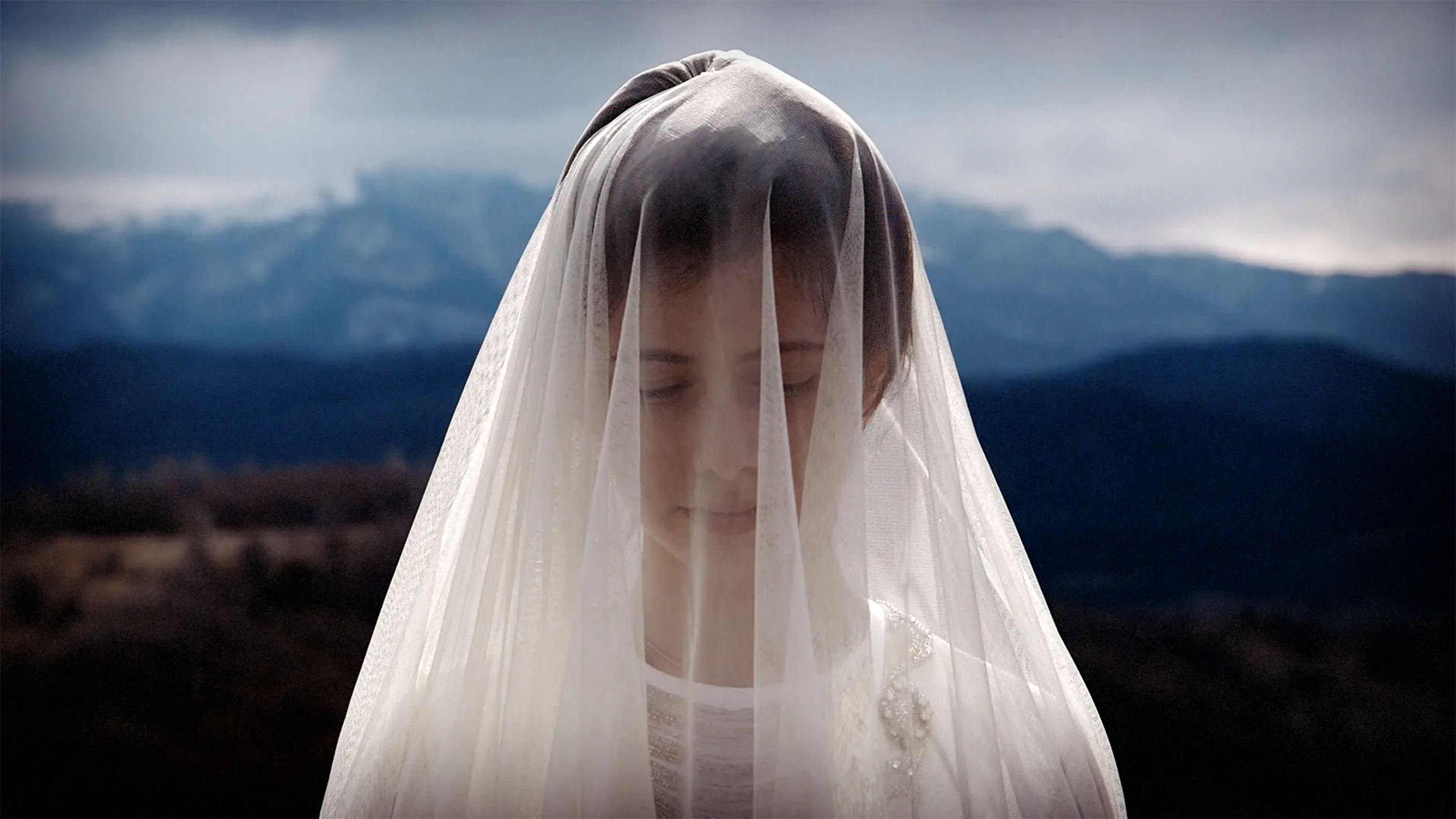
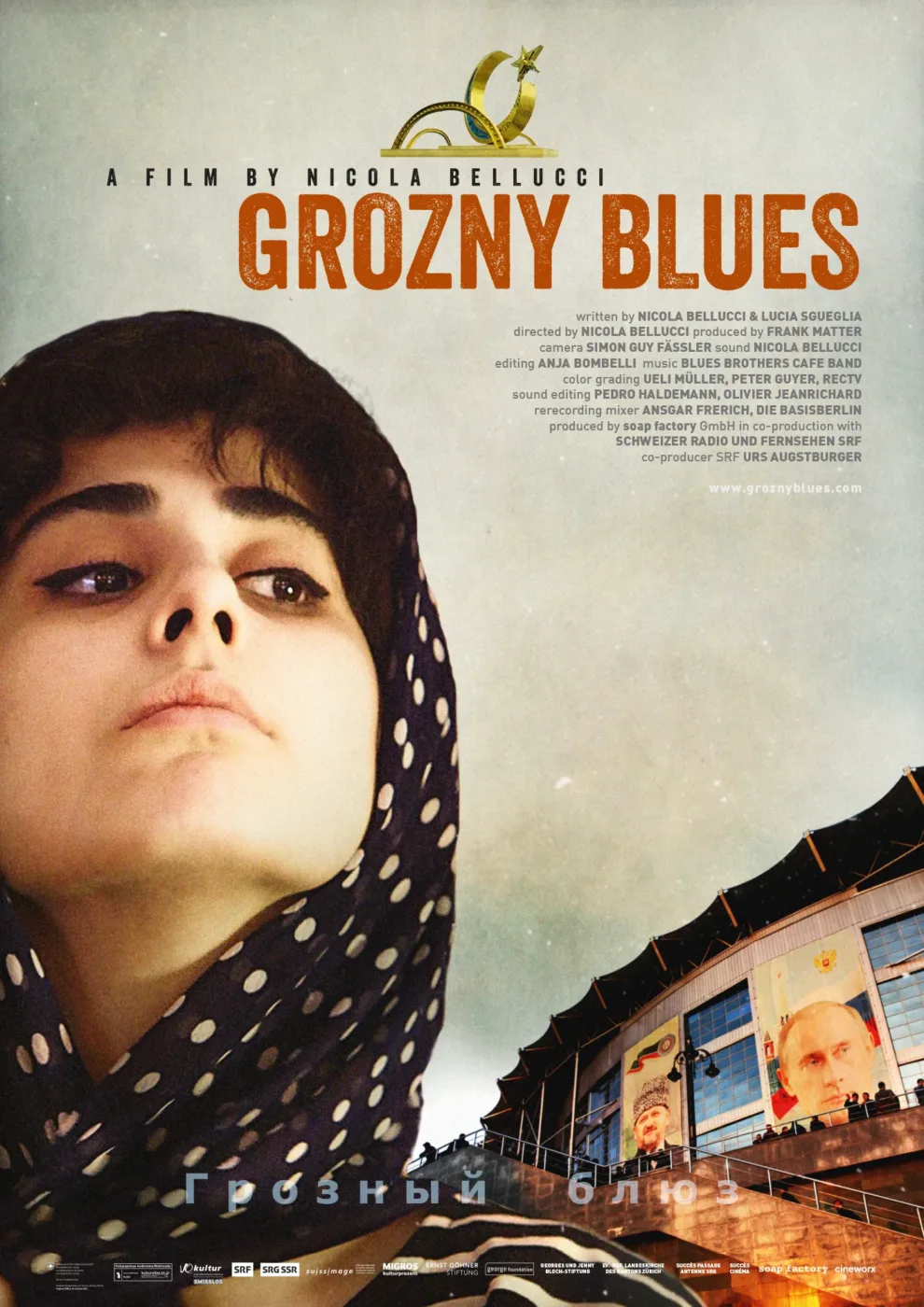
Grozny Blues
Nicola Bellucci, doc., 104 min., CH 2015
Nominated for the Swiss Film Award 2016
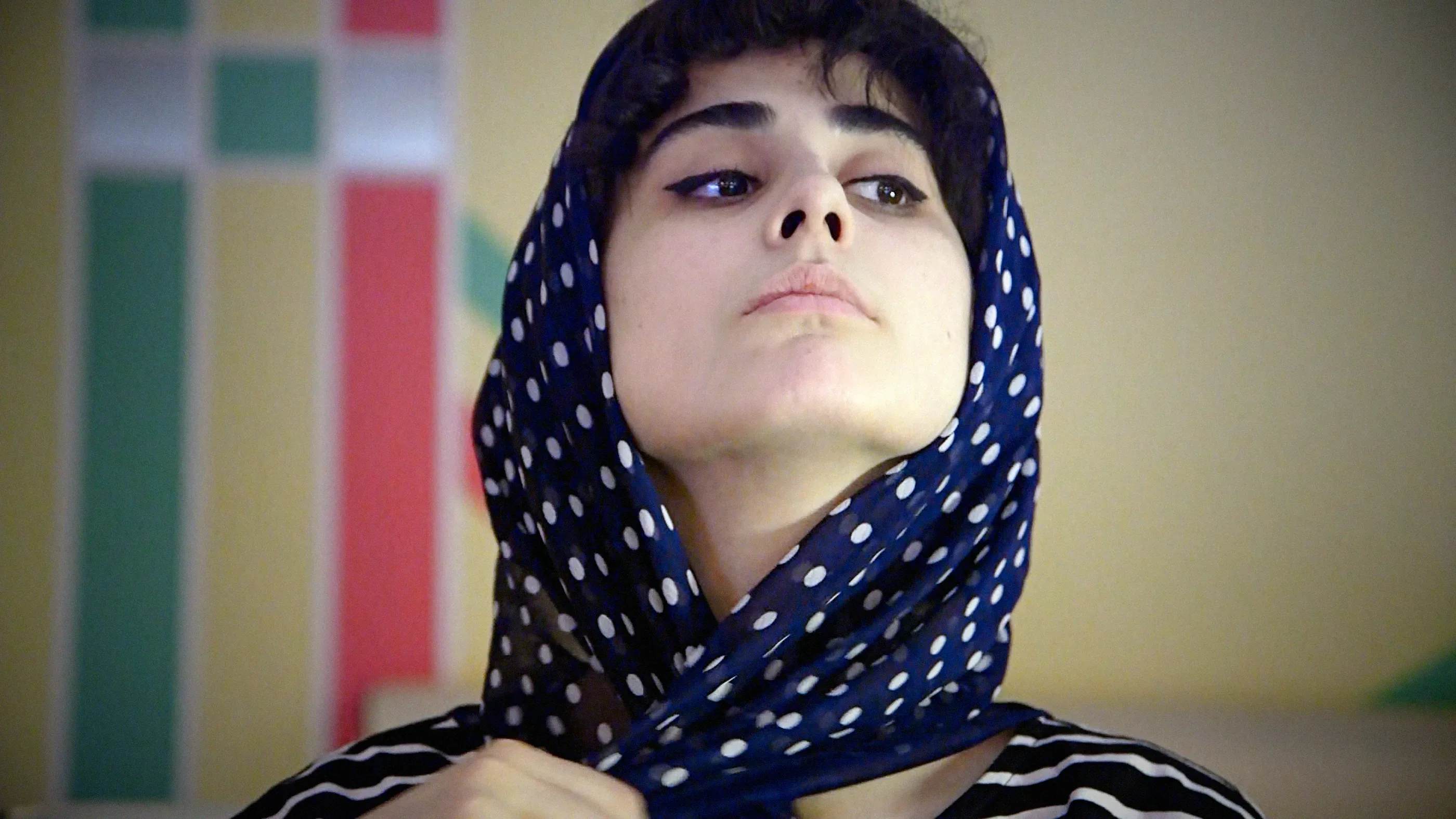
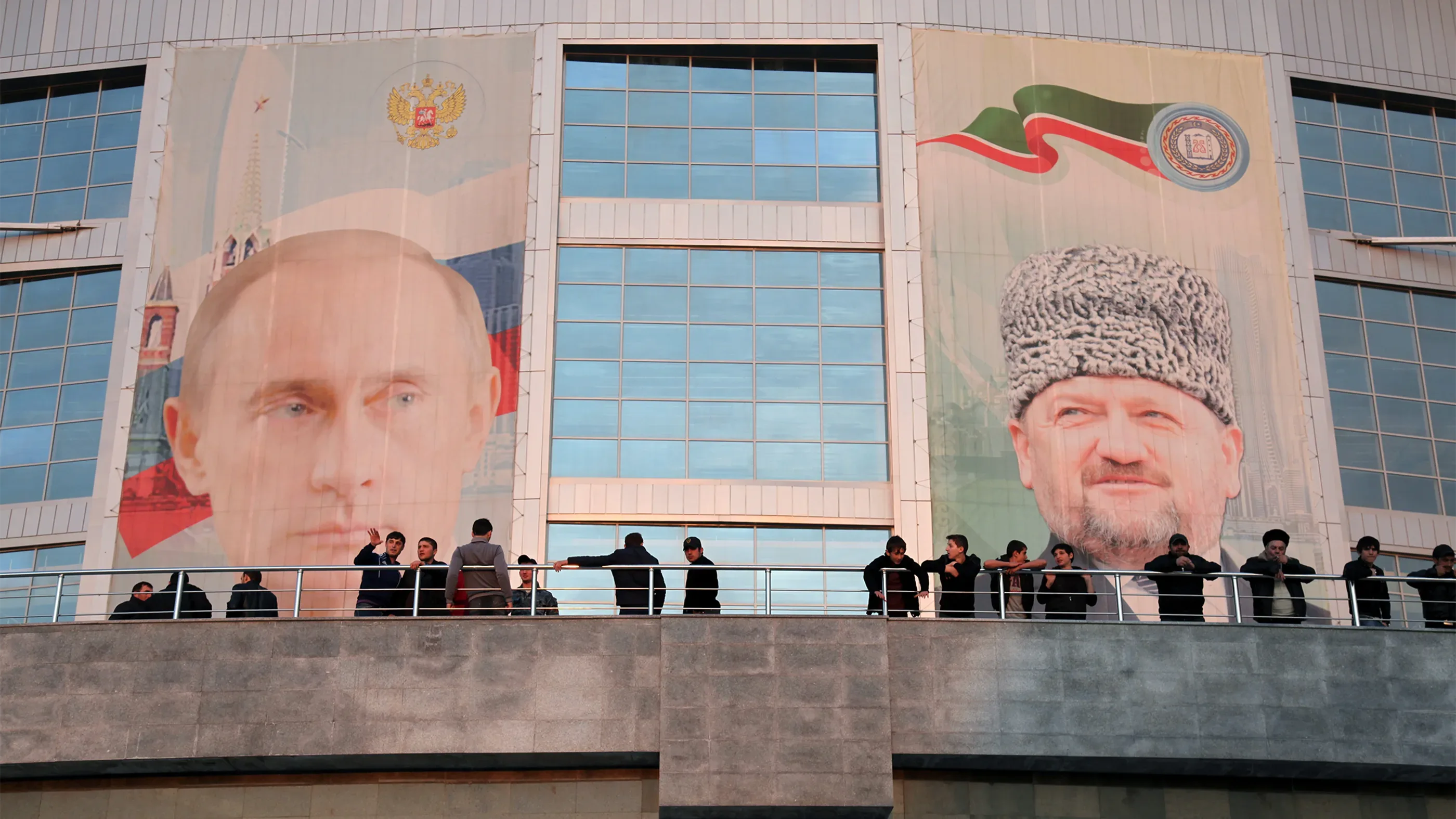
«Grozny Blues» follows a few people around Grozny, the capital of war-torn Chechnya where daily life is defined by political repression, constricting customs, forced Islamification and the failure to come to terms with recent history.
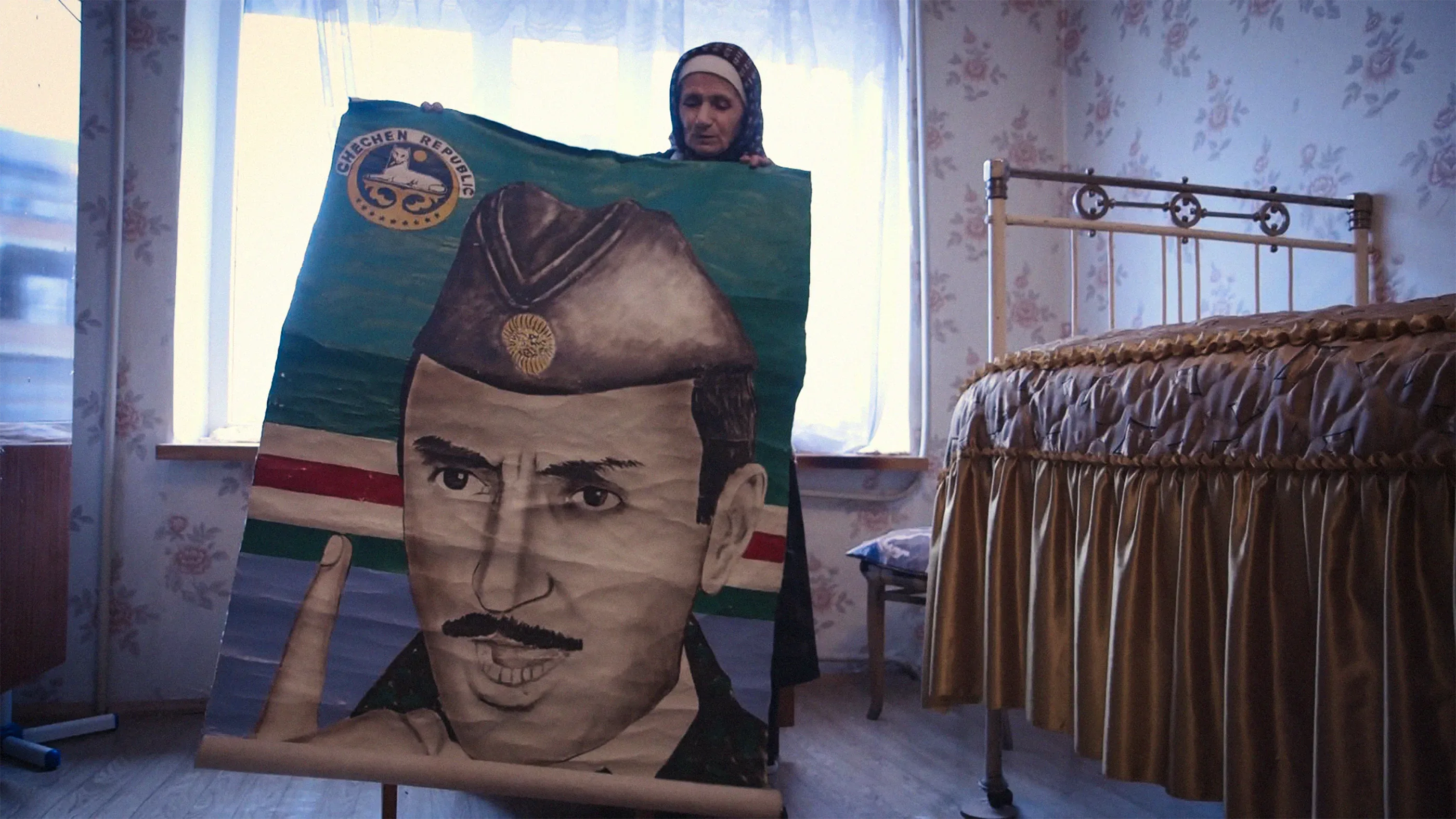
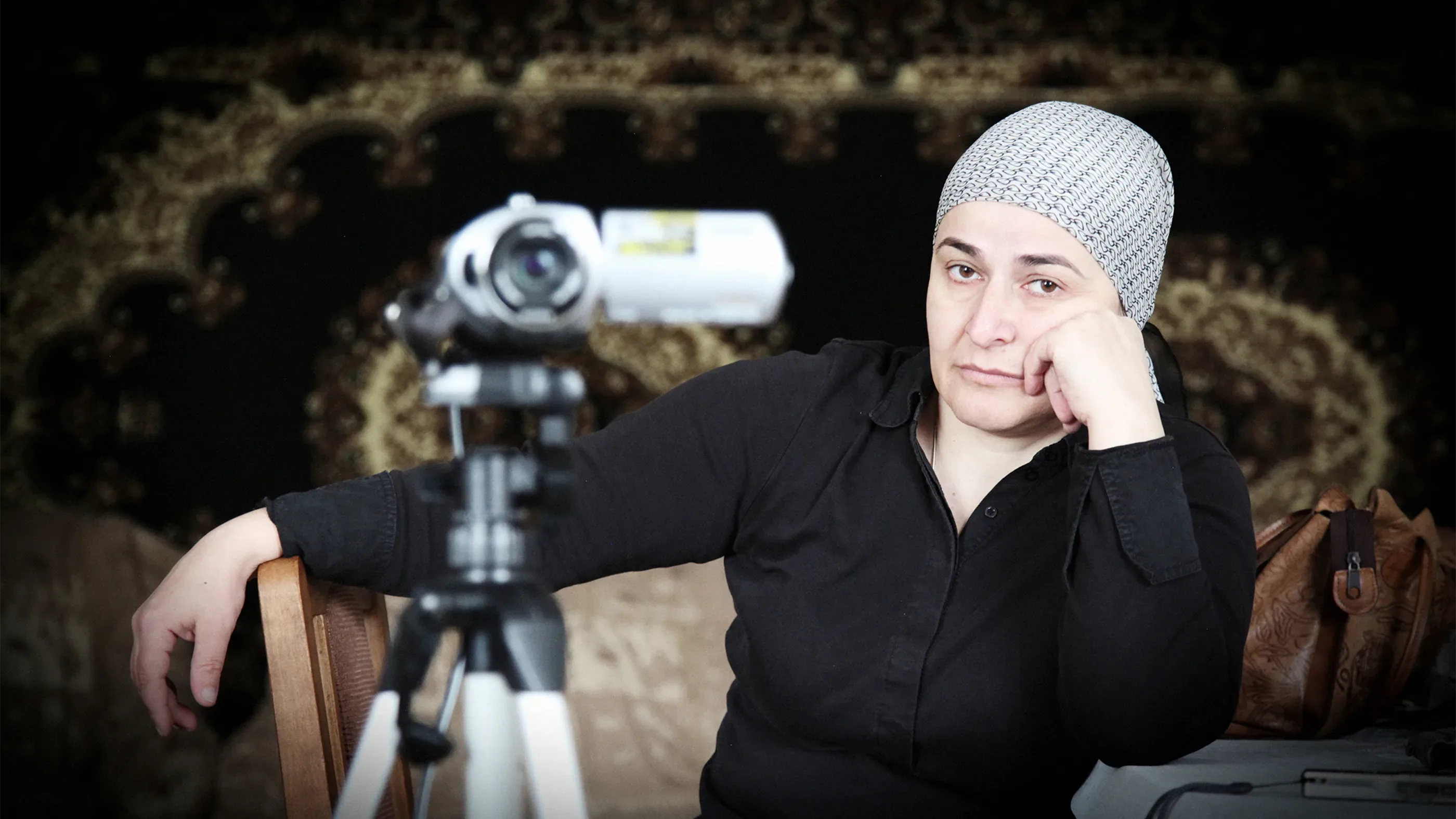
The film revolves around four women who have been fighting for human rights under worsening conditions for many years but get more and more disillusioned with the situation in Putin’s Russia. The building where they work is also home to a Blues Club that is frequented by a group of young people. Having only vague memories of the Chechen wars in the 90s, they try to make sense of the strange things that are happening in their country. In linking the personal and intimate to the political, Nicola Bellucci shows in a dramatic and yet very poetic way what it means to live in a divided society that navigates a no-man’s land between war and peace, repression and freedom, archaic traditions and modern life.
Festivals
Nomination Swiss Film Award 2016
Doc Selection 2015, European Film Academy
IDFA, International Documentary Film Festival Amsterdam, 2015, Netherlands
Visions du Réel, International Competition, 2015, Nyon, Switzerland
Festival del Film Locarno, 2015, Switzerland
DOK Leipzig, 58th International Leipzig Festival for Documentary and Animated Film, 2015, Germany
Busan International Film Festival, 2015, South Korea
Göteborg IFF, 2016, Sweden
Thessaloniki Documentary Film Festival, 2016, Greece
Trieste Film Festival, International Competition, 2016, Italy
DOC/IT Associazione Documentaristi Italiani, Stadion Video Award 2016, Italy
Festival Documentaria Noto, Special Mention, 2016, Italy
Solothurner Filmtage, 2016, Switzerland
Main award, Argentina FICiP, 7th International Festival of the Political Cinema, 2017, Buenos Aires
Ismailia International Film Festival for Documentaries & Shorts, 2016, Egypt
Cinema Verité Iran International Documentary Film Festival, 2015, Tehran
ASN Convention Documentary Film Festival, International Competition, 2016, New York, United States
One World International Human Rights Documentary Film Festival, 2016, Prague, Czech Republic
One World International Human Rights Documentary Film Festival Romania, 2016, Bucharest
dokumentART, 2016, Neubrandenburg, Germany
Visioni Fuori Raccordo – Rome Documentary Fest, 2016, Italy
Visionaria International Film Festival, Siena, Italy
Docudays UA International Human Rights Film Festival, 2016, Kiev, Ukraina
ArtDocFest Festival, International Competition, 2015, Riga, Lativa
Clique Film Festival, 2015, Kazakhstan
CinéDOC Tbilisi, Focus Caucasus Competion, 2015, Georgia
Golden Apricot Film Festival, International Competition, 2015, Yerevan, Armenia
WHAT THE CRITICS SAY
«Grozny Blues is a web of associations, suggestive and full of contrasts, a film without commentary or text inserts. A cinematic journey of multiple narratives that form together into a unified image, which has little to do with the clichés of the Kalashnikov-toting terrorists from the Caucasus. Instead we are presented with the simultaneity of destruction and everyday life in Chechnya, of a past that has been leveled and a surreal normality. (…) A form of carnival-esque subversion seems to be present in this post-war Chechnya. A kind of creative infiltration that Nicola Bellucci employs as a tool when swirling together different time periods in «Grozny Blues». He invokes the devastation until it runs through the veins of everyday existence and the office towers in Grozny seem like gravestones. He keeps those who have disappeared alive, as a form of ghostly consciousness in the present. He collides things together so that we can make our own connections. We are frightened – and illuminated.»
Pascal Blum, Tages-Anzeiger, Zurich
«This kaleidoscopic documentary offers fragmentary narratives (…) disturbing.»
Bertrand Tappolet, Le Courrier, Geneva
«Swiss director Nicola Bellucci seems to look upon Chechnya as if it was a testing ground for nuclear weapons. War has ravaged this territory, and the results seem to catch the fresh eye of the foreign artist. After long being at the center of exhausting unrest, the country recently entered a new stage of formal peace. Yet the filmmaker is more interested in civil and spiritual harmony. Bellucci is supported in his quest by the film’s main characters, foremost among which is a group of women who documented the war years. Their video images are mixed with Bellucci’s post-apocalyptic views as well as archival sources, creating vivid, poetic contradictions, often venturing into the grotesque. The whole film is based on these contradictions: hellish past and gloomy future; archaic traditionalism and unclear globalization. Reformed Grozny seems to be flawless from afar, but reveals its cracks upon closer examination. This makes familiar images strange and unrecognizable: from the challenges of terrorism to a mountain wedding; from conciliatory conformism to vengeful incitement. Yet the street chants heard in Grozny Blues echo the hopeful and forever urgent Woodstock slogans from the past: «The war has ended» and «Give peace a chance.» Bellucci has created an original Chechen postmodern picture, in which past and the future are seperated by an odd and blurry borderline – a tightrope Chechnya’s present is cautiously walking on.»
KA, Festival Journal, Yerevan
«Grozny Blues reconstructs both the past and the present of this traumatized region: two hours of goosebumps during which archival video material and manifestations of present-day neo-fascism and collective forgetting are presented.»
Carlota Mosegui, El antepenúltimo mohicano, Cáceres, Spain
«Every time «Grozny Blues» presents a relatively harmless image of everyday life in the city, every time when you can breath normally again, feel secure, and think that maybe it’s not that bad (in Chechnya), Nicola Bellucci shows excerpts from the video material that the women shot during the war, (it’s) full of destruction, misery, and death. (…) If there is no better future for Grozny in sight, then everyone should at least know about the events that led things down this path.»
Mark Kuzmanic, Billet.ch
«Grozny Blues is a journey as passionate as it is dramatic, into a paradoxical Chechnya divided between a phantasmagorical past and an apparently (post) apocalyptic future. The lucid and sensitive gaze of Nicola Bellucci explores this uncertain land, digs through the few remaining ruins to bring to light a past that screams otherworldliness. (…) «Grozny Blues» tries to give a voice to the ghosts haunting the Chechnyan capital using a complex system of echoes. The droning sound of revolutionary speeches, the dramatic images of war (bravely compiled by the three activists who are transformed in a common thread of the film) are often placed in parallel with the fake glitz of everyday life like a scream which, instead of going on forever, is blocked by a huge wall, bouncing back in the form of an echo, again and again.(…) Since talking about it is prohibited, another form of communication has come about, which Nicola Bellucci captures magnificently, made up of gestures, gazes, ghosts still lingering in the empty houses and laughter echoing in the ears of those who are left. The desperate testimonies of the few militants who still live in Grozny and the extraordinarily rich archive material that Bellucci brings to life in his film throw us into an extremely complex reality that of a dreamt-of Caucasus that became a nightmare. A deep and sensitive piece, which deserves our undivided attention.»
Giorgia del Don, Cineuropa.org
«Grozny Blues is a haunting, often dreamlike documentary about Chechen people caught between the contradictory pressures of manufactured realities and coerced silences. Right from the beginning, as the film opens with a quotation from Bertolt Brecht, ‘It said in the papers this morning that a new era has begun’ it is clear that director Nicola Bellucci’s documentary Grozny Blues, a masterful work about contemporary Chechnya, is fixated with contrasting today’s Chechnya – the Chechnya of Ramzan Kadyrov – with Chechnya’s past. (…) At the heart of this documentary are four women, and their dedication to preserving memory. During the first Chechen war, they traversed Grozny with a camera; methodically recording the death and destruction they found around them. Recalling those days, they say they had an agreement that if one of them were killed, the others would continue filming, explaining, ‘It’s not that we didn’t care about our lives. We knew that we had an important job to do.’ Bellucci follows these women today as they continue their work, now documenting abuses of Ramzan Kadyrov’s regime. They meet with families of those abducted and killed by Chechen security services, take down details of the kidnappings, listen to their pain. As one of the protagonists says to a visitor whose child disappeared, ‘We cannot find the culprits and punish them, but maybe there are other ways to help you.’ The heroic significance of these women’s work becomes clear when considering the social and political environment in today’s Chechnya. Kadyrov, after assuming the position of head of the republic in 2007, continues to promote pro-Russian ideologies in exchange for support from Moscow. He has balanced elite interests by co-opting them, stabilised the economy, and ruled through his notorious security forces. His total dominance requires absolute allegiance and silence about anything that criticises either the Chechen or Russian regime. The women’s footage, unique and rare, emerges as even more precious with this background – it highlights their efforts to preserve memory as an act of resistance to that dominance. (…)
It becomes clear that those who do not share Kadyrov’s view of the ‘given’ or the ‘natural’ origins of Chechens’ values and national disposition are rejected from the national narrative. By maintaining control over social representations, Kadyrov retains control over the dynamics of national identity, a situation, which highlights internal divisions among the Chechens on a religious basis while simultaneously reducing the political tensions between Chechens and Russians – something Kadyrov has exploited to his benefit. This advantage to Kadyrov has come at a heavy price for the rest of the republic – the price of self-expression. Bellucci exactly captures the silence that permeates everything in Chechnya – the reluctance of children to talk about whether they experience injustice at school, the empty house left behind by one of the women protagonists before she was forced to leave Chechnya for Belgium, and the photographs of the families of the missing and the murdered.»
Karena Avedissian, opendemocracy.net
A soap factory production in co-production with SRF Schweizer Radio und Fernsehen
Written by: Lucia Sgueglia and Nicola Bellucci
Original version in Russian and Chechen with English, German and French subtitles, DCP, 104 min.
World sales: Antipode Sales & Distribution
Distribution Switzerland: cineworx
Crew
Producer: Frank Matter
Co-producer SRF: Urs Augstburger
Directed by: Nicola Bellucci
Written by: Lucia Sgueglia and Nicola Bellucci
DOP: Simon Guy Fässler
Location sound: Nicola Bellucci
Assistant director: Lucia Sgueglia
Editing: Anja Bombelli
Original music: Valerio Vigliar, Bruno Franceschini
Additional original music: Marcel Vaid
Performed by Martin Schumacher (bass clarinet), Martin Biernstil (cello), Pardeep Schroeder (guitar, piano)
Additional camera: Olga Kravets, Nicola Bellucci, Géraldine Zosso
Editing assistants: Chiara Ronchini, Alkmini Boura, Sophie Brunner
Color grading: Peter Guyer, Ueli Müller, RecTV, Bern
Sound editing: Pedro Haldemann, Olivier JeanRichard, himex:sounddesign
Audio post-production: DIE BASISberlin
Stills photography: Davide Monteleone
Financial Support
Bundesamt für Kultur (EDI), Schweiz
Fachausschuss Audiovision und Multimedia Basel-Stadt/Basel-Land
Amt für Kultur und Sport und Lotteriefonds Kanton Solothurn
Kulturfonds Suissimage
Migros Kulturprozent: Postproduktion
Ernst Göhner Stiftung
george foundation
Georges und Jenny Bloch-Stiftung
Evangelisch-Reformierte Landeskirche des Kantons Zürich
Succès Passage Antenne SRG
Succès Cinéma