From One Day To The Next
Frank Matter, doc., 95 min., CH 2013
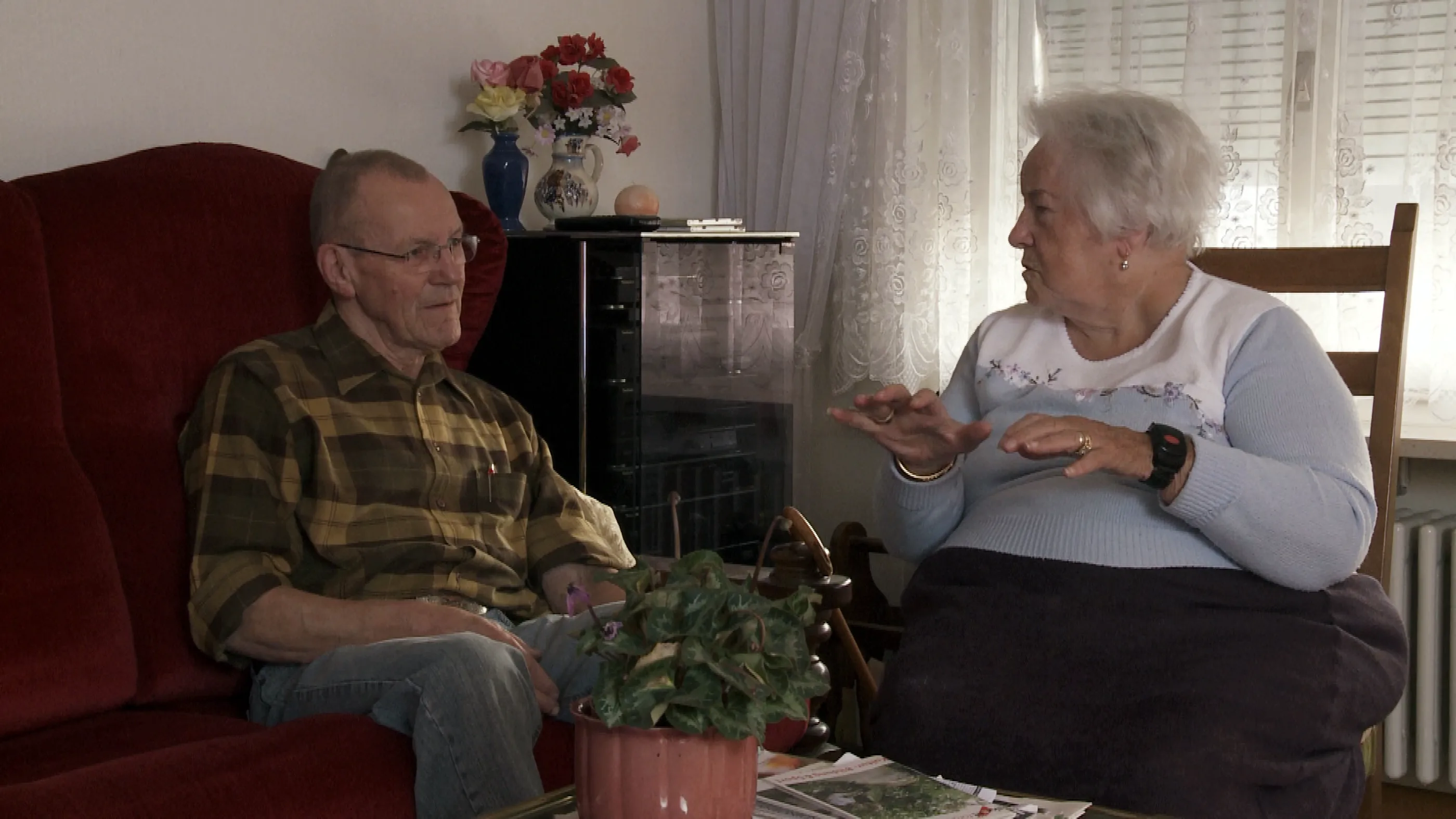
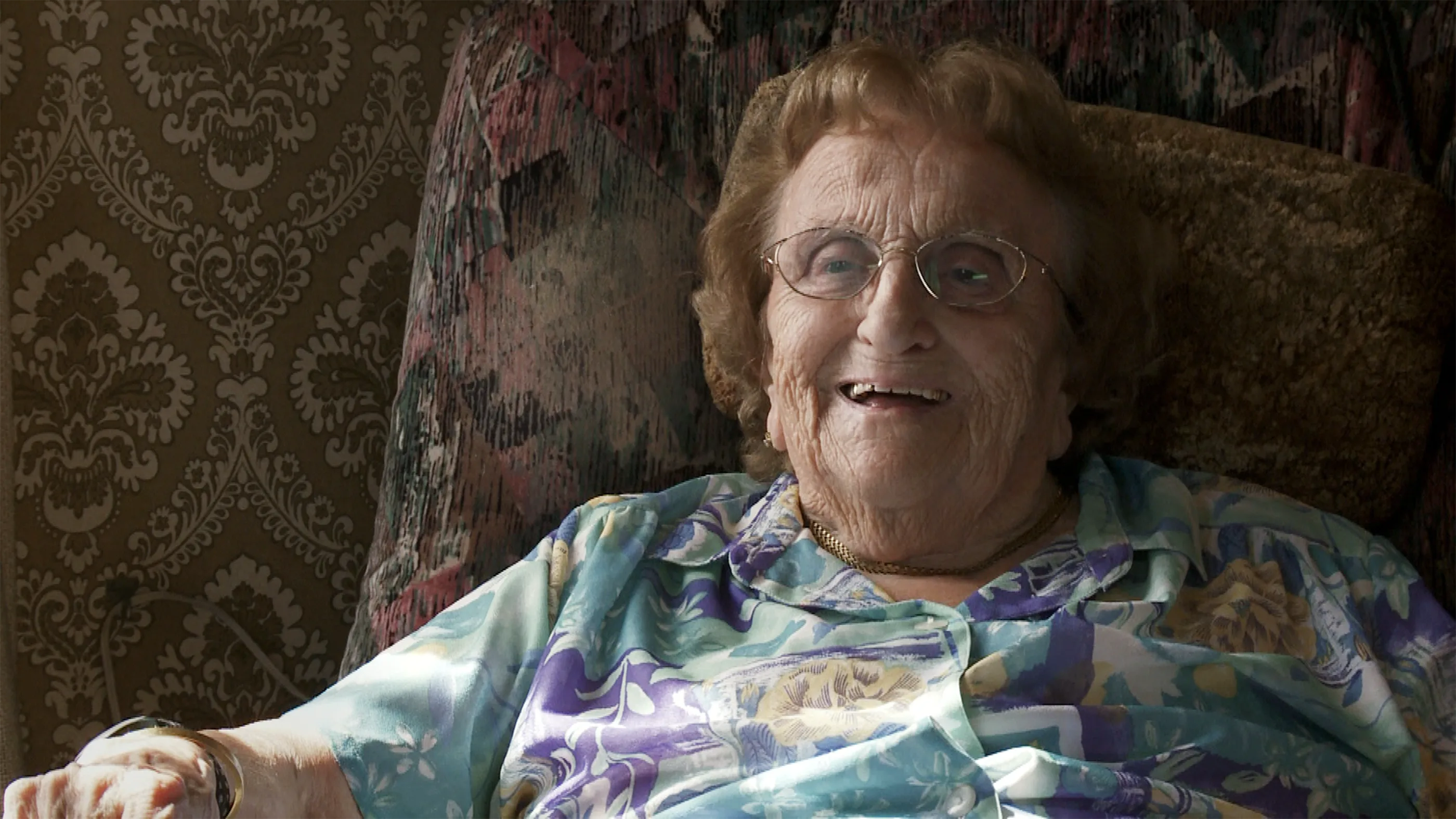
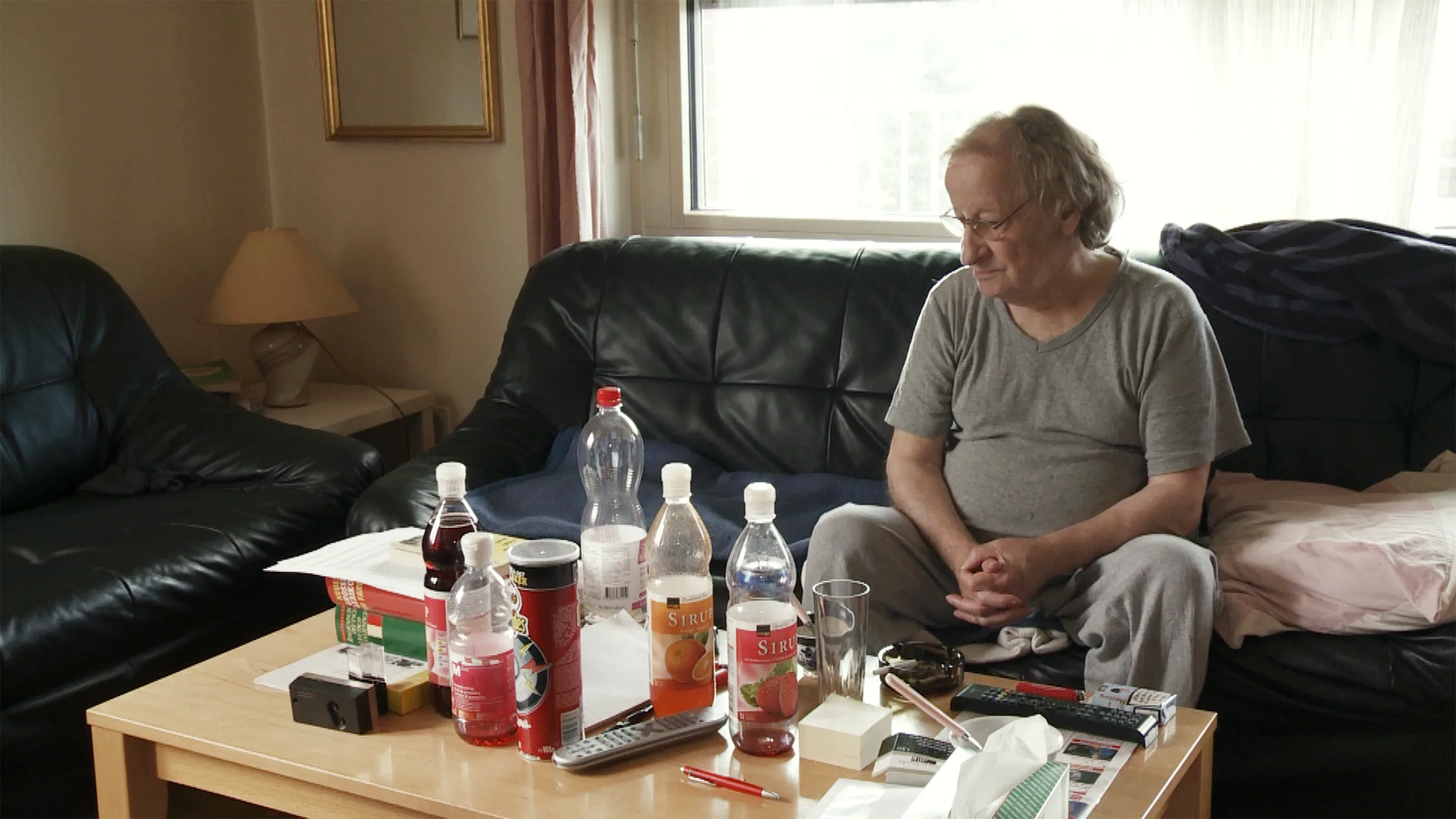
An aging population, the need to cut costs in healthcare, the fragmentation of social relations: These are much discussed topics. But how do these trends affect the lives of elderly people? What does it mean to get old in these hectic and individualistic times? «From One Day To The Next» tells the touching story of four elderly people who, with humanity and wit, are fighting for dignity, autonomy and a piece of happiness while confronting the slow mental and physical decline of old age.
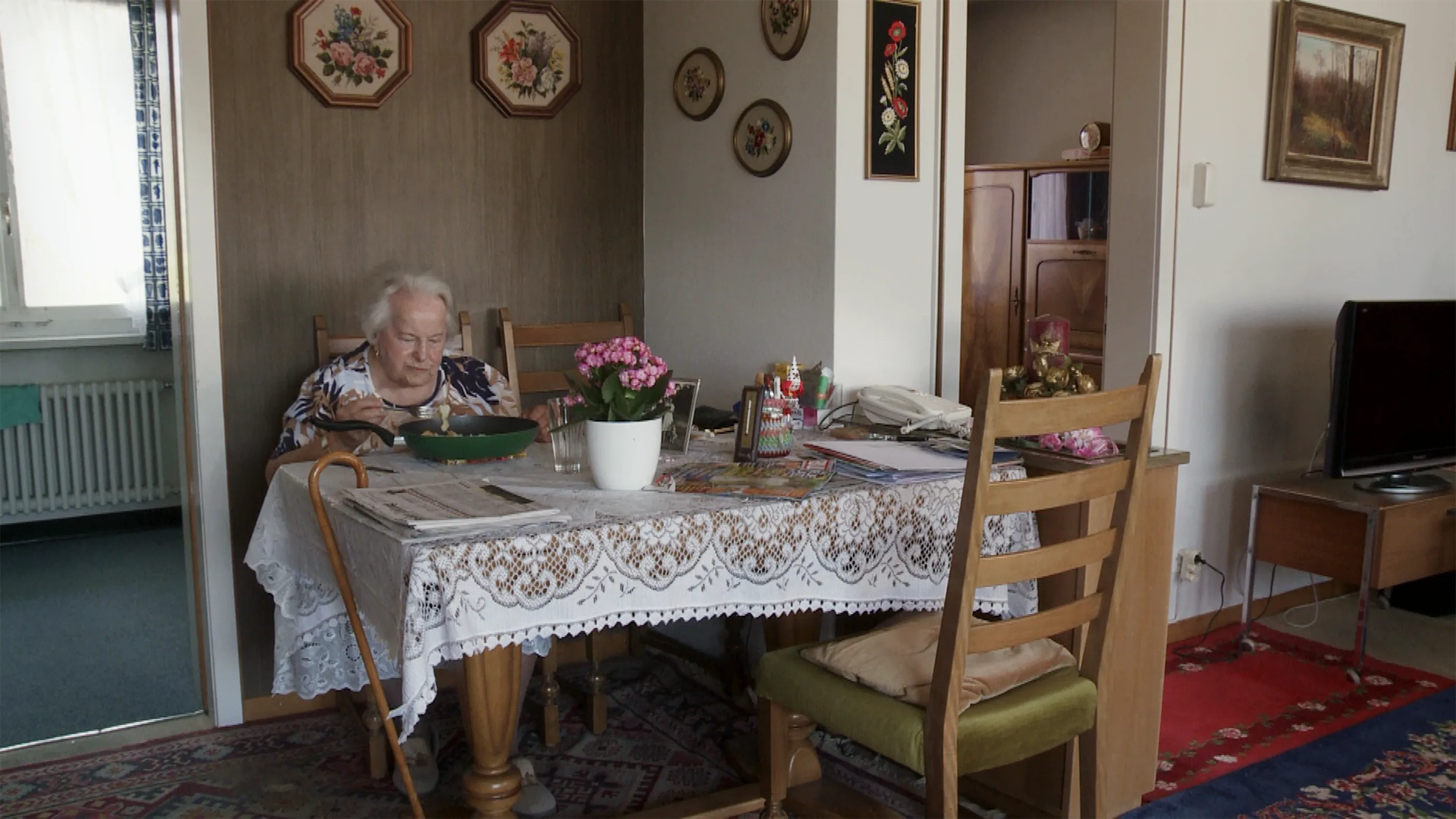
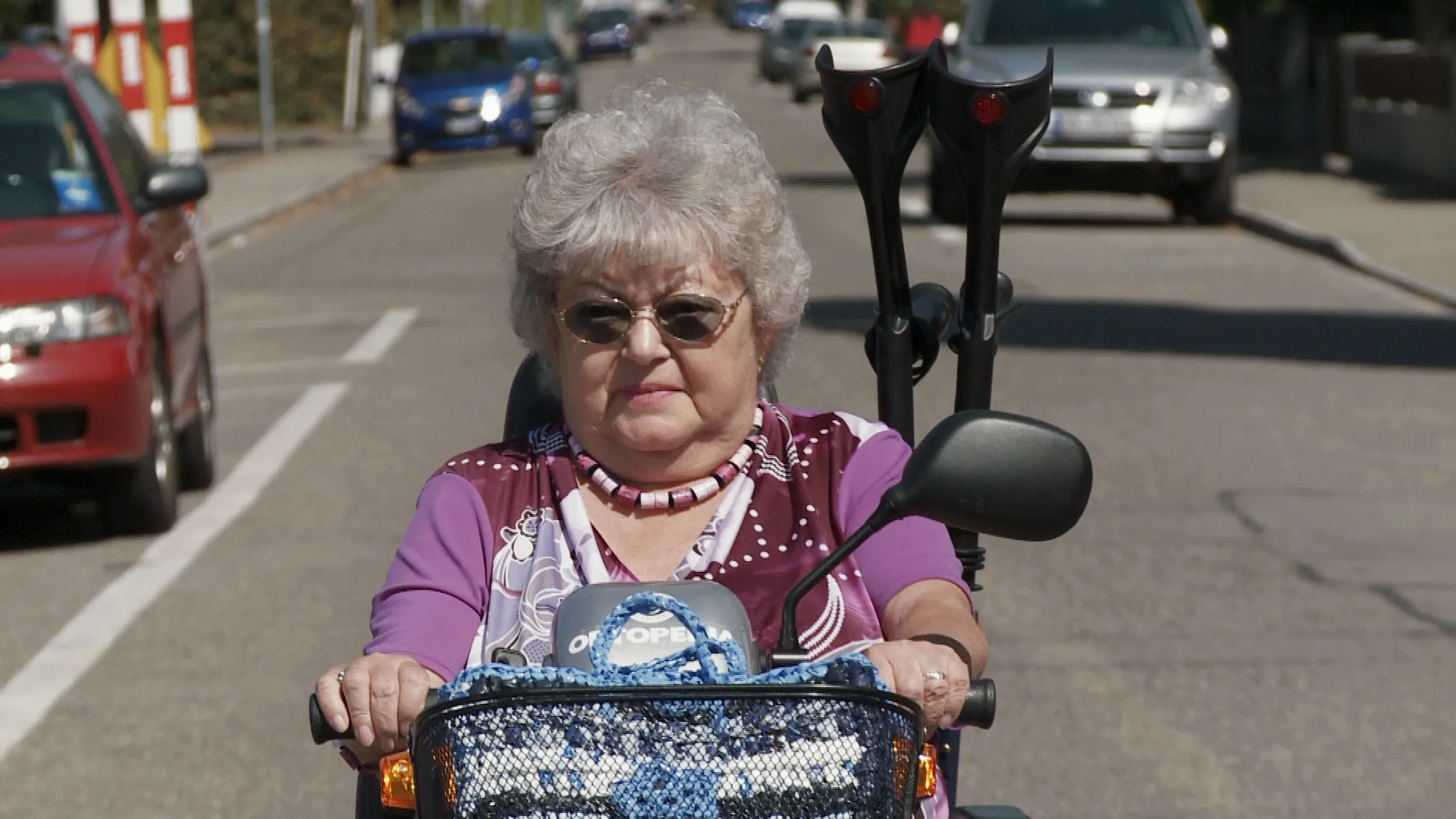
More and more people live in their own homes until old age. At home, they feel comfortable and certainly more independent than in an institution. «From One Day To The Next» follows four elderly people through their everyday lives, observing how they cope with a gradual loss of autonomy. Even as they become increasingly dependent on outside help they insist on staying at home. But it seems inevitable that sooner or later, even against their will, they will have to move to a nursing home.
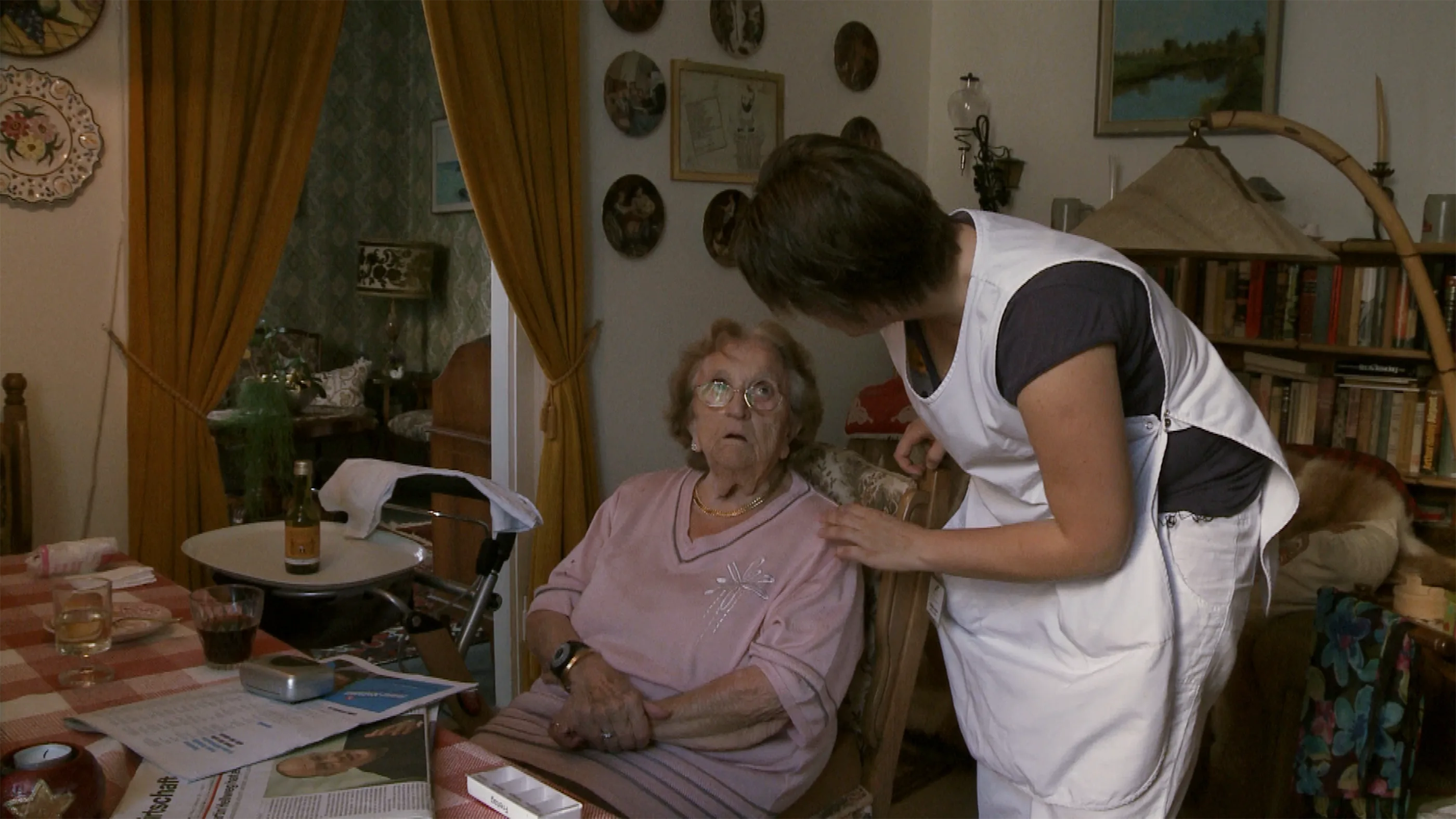
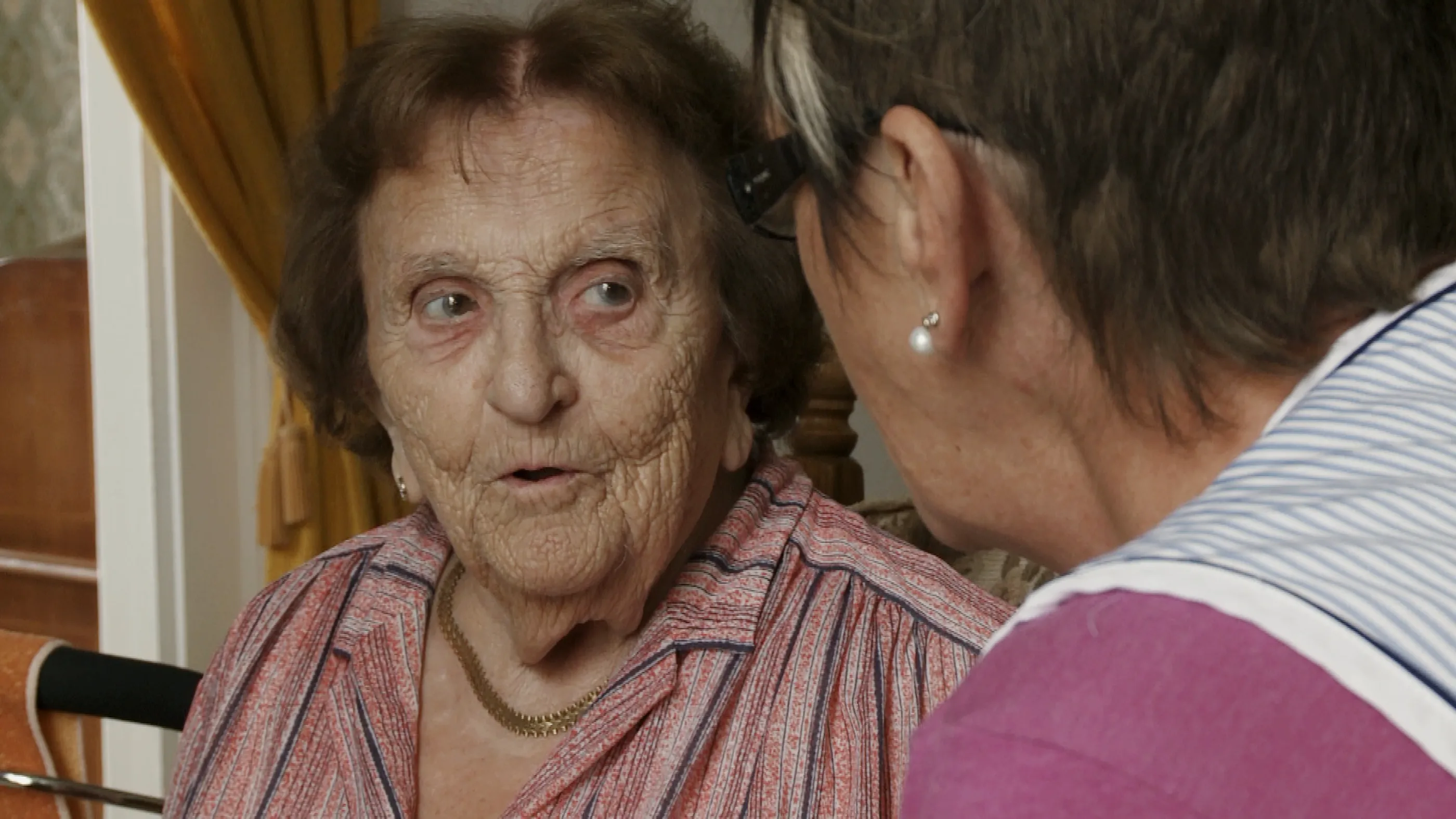
As long as the protagonists live at home, their most important contacts to the outside world are the employees of the Visiting Nurse Service. The nurses stop by every day to attend to the basic medical needs of their clients and to help them with washing, cleaning and dressing. But it’s not always easy for the nurses to reconcile their human feelings of compassion with the professional, economic and bureaucratic demands of their job.
«From One Day To The Next» tells of everyday rituals, of little quarrels and big fights, of helplessness, melancholy and of all the fond memories that make every life a unique journey. Some of the film’s scenes are reminiscent of Samuel Beckett’s stage plays. Again and again, the elderly men and women make the audience laugh with their sharp wit and their laconic humor. But sometimes that laughter gets stuck in our throats.
On a more philosophical and existential level, «From One Day To The Next» explores concepts of autonomy, respect and responsibility.
More
More and more people live in their own homes until old age. At home, they feel comfortable and certainly more independent than in an institution. They can decide for themselves how to spend their days, and they live in familiar surroundings, with all the souvenirs and keepsakes that remind them of their past. They move to a nursing home only when there’s no other way left.
«From One Day To The Next» follows four elderly people through their everyday lives, observing how they cope with a gradual loss of autonomy:
Ninety-four year old Elisabeth Willen often feels lonely. Nonetheless, she can’t fathom selling her beautiful house and moving to the town’s nursing home. Yet that’s exactly what her relatives, the visiting nurses and her doctor think she should do – for her own good. But Elisabeth Willen is resisting their pressure as long as she can.
Monique Hofmann dreams of meeting her favorite singer Rudy Giovannini one more time in person. Even as her failing health seems to make this increasingly impossible she doesn’t give up hope that her dream will come true.
For Silvan Jeker and Anny Fröhlich it’s difficult to accept that they are becoming dependent on help from other people. To defend their autonomy they put up active and passive resistance against the people and institutions who are trying to help them.
Often, family members are busy with their own hectic and complicated lives, and are overwhelmed by the needs and demands of their elderly relatives. That’s why, for many old people, the employees of the Visiting Nurses Service are the most important, or at least the most constant contact to the outside world. The nurses stop by every day to attend to the basic medical needs of their clients and to help them with washing, cleaning and dressing. But while the elderly are dependent on these services in an existential way, it’s «only» a job for the nurses themselves and, as healthcare workers, they have to be careful not to burnout. And it’s not always easy for the nurses to reconcile their own human feelings of compassion with the professional, economic and bureaucratic demands of their work.
«From One Day To The Next» tells a story of everyday rituals, of little quarrels and big fights, of helplessness and melancholy and of all the fond memories that make every life a unique journey. Some of the film’s scenes are reminiscent of Samuel Beckett’s stage plays. Again and again, the elderly protagonists make the audience laugh with their sharp wit and their laconic humor. But sometimes that laughter gets stuck in our throats.
On a more philosophical and existential level, «From One Day To The Next» explores themes like autonomy, respect and responsibility: What is the meaning of freedom? Do we have to respect the autonomy of another person even if we know that person can no longer decide what’s in his (or her) own best interest? What does it mean to live in a society where more and more human interactions become paid services? What narratives do we employ to make the inevitable seem acceptable and the unbearable bearable?
The documentary was shot in the towns of Allschwil and Schönenbuch (BL), in collaboration with the local Visiting Nurse Service.
With
Anny Fröhlich, Monique Hofmann, Silvan Jeker, Elisabeth Willen
Marino Klingenberg, Rosmarie Hofer, Miri Fairchild, Felicitas Brun, Isabel Gubser, Jeanette Hänggi, Adela Musić
Andreas Honegger, Claudia Lanz, Marija Jakić, Carina Sufryn, Radmila Stojanov-Iliev,Annick Tanner, Marlis In-Albon, Imelda Coray Kessler, Joanna Bar, Marie Wyss, Maja Geitlinger, Corinne Zumsteg, Vreni Stohler, Jessica Versel, Claudia Gisske, Michèle Zandonà
Anna Oser, Anna Lörracher, Helene Tschachtli
Edith Fisch, Luzie Hediger
Doris und Bruno Erzer-Fröhlich, Hans-Peter Farner, Hanni Thür-Weisshaupt, Gertrud Grossen, Walter Willen, Franz Thür-Weisshaupt
Silea Wintsch, Danielle Thürkauf, Litrim Kukaj, Bruno Schweizer
Rudy Giovannini
WHAT THE CRITICS SAY
«For Swiss cinema the year 2012 was largely characterized by documentary highlights, and so one watched expectantly to see how this genre would develop. Certainly one such highlight was ‚Von heute auf morgen‘ (From One Day to the Next), Frank Matter’s empathic observation of four individuals of high age, who resisted having to go to a nursing home.»
Geri Krebs, Neue Zürcher Zeitung, January 28, 2013, Zurich
«Such figures, who fought for the preservation of their dignity and self-determination, left the strongest impression in Solothurn. For example, the four elderly from Frank Matter’s documentary film ‚Von heute auf morgen‘ (From One Day to the Next) (NZZ January 28, 2013). Two of them were present for a public discussion at the cinema Landhaus last Tuesday in conjunction with the second screening of the film, and they provided this year’s film festival with some of its most moving moments.»
Geri Krebs, Neue Zürcher Zeitung, February 2, 2013, Zurich
«A radical element of ‚Von heute auf morgen‘ (From One Day to the Next), a documentary film by Frank Matter, is simply the tenacious sense of empathy that permeates his observation of older people, who were fine as long as one allowed them to believe that they were fine. One of them was Mrs. Willen, 94 years old, who sat there every day and very pleasantly asked herself how long she would keep sitting there. And the woman from the home nursing service tells her the latest news from the village of Schönenbuch, in the canton of Baselland, for example that Mr. Ernst Sütterlin has died and Mrs. Willen says: ‚Oh yes, the man who lived near the customs house, down in the village,‘ as if Mr. Sütterlin had merely quickly dashed around the next corner just in front of her. Another is Mrs. Fröhlich, 95 years old, a tough nut, who had mellowed with age, as her daughter says, although she still had a few rough edges. But one certainly could not hold it against her that she objected to the home nurse putting away her hearing aid, because the stressed caretaker, who had meant no harm and definitely did not have an easy time with Mrs. Fröhlich, forgot that an old person also watches TV after 5 pm. And then suddenly both of them were in nursing homes, Mrs. Willen and Mrs. Fröhlich, and they felt that something wasn’t right. Of course, something wasn’t right, but of course everything was as it should be. The delicate and painstaking qualities of Frank Matter’s film come through in such incisive incoherencies in the face of death. Neither judging nor condemning and utterly ambiguous as to which side it is taking, the film is fully conscious of the conflict between the dignity of the elderly and the necessities of support pantyhose and regularly changed incontinence underwear.»
Christoph Schneider, Tages-Anzeiger, Zurich and Der Bund, Berne
«‚Always all this fuss.‘ Mrs. Fröhlich is annoyed. Her homecare nurse has just asked her once again to put on her incontinence underwear. Getting old is not easy. The loss of independence, physical strength, and future perspective. But a great deal of humor, defiance, and mischievousness remains. Frank Matter filmed four old people and their home nurses. The result is a touching and definitely worthwhile film that also gives us a lot to laugh about. However, it also painfully causes us to reflect back on ourselves and consider our own aging.»
Raphael Amstutz, Bieler Tagblatt, Biel
«No documentary film is successful by merely recounting the facts but must develop a form of narrative. Frank Matter’s documentary ‚Von heute auf morgen‘ (From One Day to the Next), for example, presents a well-conceived story-line…. The director’s perspective reflects an unrelenting sense of human compassion; not only is it utterly sympathetic to the defiance of the elderly but also to their relatives, who at some point do what has to be done–even if it seems coldhearted in the face of death and irreverent towards the aged. From this springs the drama of the film, which leads us towards the inevitable, forgoing pathos. At the end, the camera is still, focusing on the stark tragedy of the institutionalized care of the elderly: The 95-year-old Elisabeth Willen finds herself back in the nursing home and learns that she is now here because she had a lung infection and that the television is all ready for her. Mrs. Willen then asks what this is all about, because she wasn’t informed, and now she’s landed in the home overnight, and something isn’t quite right. But in fact everything about this documentary film is right on the mark. It certainly would deserve the Prix de Soleure, not least due to its highly sensitive observations.»
Pascal Blum, Aargauer Zeitung, Solothurner Zeitung, Basellandschaftliche Zeitung, Aarau
«‚The homecare nurses? They are nice, really,‘ says Anny Fröhlich, grinning mischievously into the camera. ‚They do just what I want them to.‘ The senior citizens in the documentary ‚Von heute auf morgen‘ (From One Day to the Next) garnered the laughter of the film festival audience. But when the 95 year old is forced to go to a nursing home, this laughter stuck in everyone’s throat. ‚They used to slaughter people like me. A little bit of poison-mixture and that was that.‘ Desperate. Cunning. Rebellious. In ‚Von heute auf morgen‘ director Frank Matter explores a full spectrum of emotions. With this sensitive portrait of four seniors and their sometimes demanding caretaker community Matter achieves an approach finely attuned to a topic that, although not ignored in Swiss films, has certainly not been fully explored…. The best possible but hard-earned reward for a filmmaker is an audience that not only appreciates but frenetically applauds such difficult topics – as was the case with Frank Matter’s ‚Von heute auf morgen‘.»
Hans Jürg Zinsli, Berner Zeitung, Berne and St. Galler Tagblatt, St. Gallen
«Another topic of the Solothurner Film Festival – and contemporary filmmaking in general – is aging. Like the prize-winning film Amour by Michael Haneke and the opening film Rosie by Marcel Gisler (see BaZ from last Saturday), the documentary film ‚Von heute auf morgen‘ (From One Day to the Next) tells the story of elderly people who have reached the point of needing nursing care. Frank Matter accompanies three women and an old man who increasingly require the help of others and gradually surrender their independence. However, the portraits painted by the Sissach filmmaker are anything but bleak. By capturing the quirks of the seniors on camera and letting them talk, the film gets more laughter than hardly any other film. Both lovable and stubborn, the protagonists would have had to go to a nursing home long ago, if it had not been for the help of the home nurses. The film has been nominated for the Prix de Soleure.»
Muriel Gnehm, Basler Zeitung, Basel
The Film’s Official Website
BUY DVD
A soap factory production in coproduction with Schweizer Radio und Fernsehen SRF and SRG SSR
Writer, director: Frank Matter
Based on a concept by Peter Aschwanden
Swiss German original version, English, German, French subtitles, DCP.
Theatrical version: 95 min.
World sales: soap factory GmbH Basel
Distribution Switzerland: cineworx
Crew
Producer: Frank Matter
Writer, director: Frank Matter
Based on a concept by Peter Aschwanden
DOP: Steff Bossert
Sound: Olivier JeanRichard
Additional Camera: Daniel Leippert, Benedikt Ritter, Nicola Bellucci, Tom Bernhard
Additional Sound: Pascal Kreis, Hans Dahler
Aufnahmeleitung: Franziska Trefzer
Production Assistant: Loredana-Nastassja Fernández
Editor: Anja Bombelli
Assistant Editor: Andreas Arnheiter
Composer: Victor Moser
Stills Photographer: Dominik Labhardt
Sound Editing: Pedro Haldemann, himex:sounddesign, Solothurn
Mixer: Peter von Siebenthal, Complex-Projektstudio, Bern
Color Grading: Steff Bossert, Ueli Müller, RecTv
Credits: Zoé Bucher
Person in charge Pacte and Coproductions SRF: Urs Augstburger
Equipment: point de vue, Basel
Project Accountant: Marcel Pfeiffer
Subtitle Spotting: Nicola Bellucci
Financial Support
Schweizerische Autorengesellschaft SSA (Projektentwicklung)
Bundesamt für Kultur, EDI, Schweiz
Fachausschuss Audiovision und Multimedia der Kantone Basel-Stadt und Basel-Landschaft
Kulturfonds SUISSIMAGE
Ernst Göhner Stiftung
Hans Vontobel Stiftung zur Förderung des Gemeinwohls
Jubiläumsstiftung der Basellandschaftlichen Kantonalbank
Kulturförderung/Lotteriefonds des Kantons Solothurn
Succès passage antenne
Succes Cinema
Schweizerisches Rotes Kreuz
Amavita Apotheke Paradies, Allschwil
Bürgergemeinde Allschwil
Evangelisch-reformierte Kirchgemeinde Allschwil-Schönenbuch
Röm. Kath. Frauenverein St. Peter und Paul Allschwil
Christkatholischer Frauenverein Allschwil
Frauenverein St. Theresia Allschwil